


You have the data.
You don't yet have the means to turn it into decisions.
Your teams make dozens of decisions every day. The data to answer sits in your warehouse, days away. So they decide on instinct. As if the data didn't exist.
Sleeping data
Your warehouse costs a fortune. The majority of decisions it could inform, aren't.
A saturated data team
If one exists. Otherwise, every business request becomes a six-month project or a dashboard nobody opens.
Gut-feel decisions
Your competitors with data teams already automate these calls. Every week on instinct is margin left on the table.
A churn risk to contain, a stock to arbitrate, a price to defend: bring the problem, leave with the decision. In minutes, while the opportunity is still on the table. No ticket, no backlog, no waiting three weeks for a number that arrives after the call.
Four steps. No migration. No overhaul.
Matr plugs into the stack you already run. From connection to decisions in production, here is how it works.
Connect your data
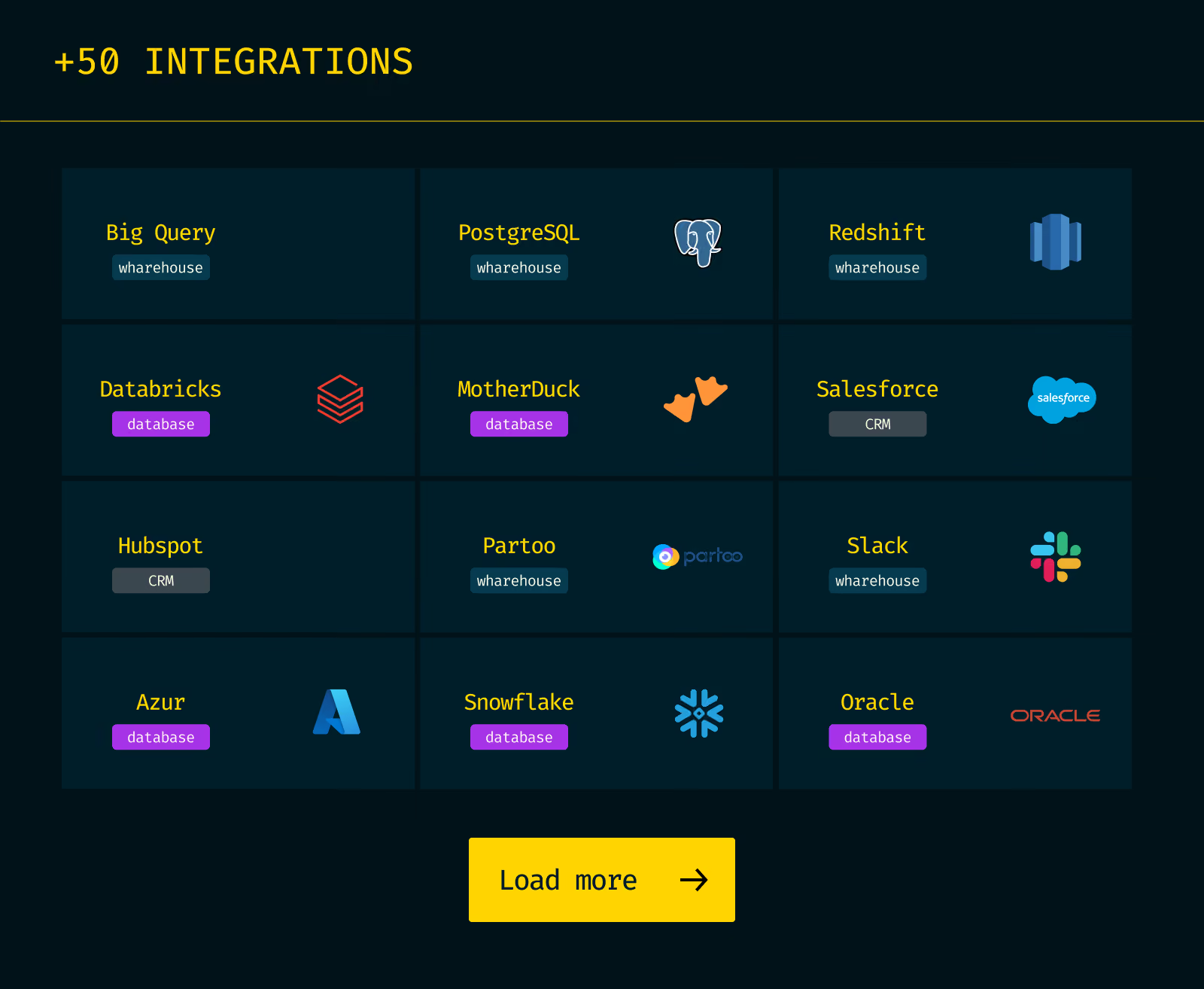
Matr reads your data where it lives. BigQuery, Snowflake, Redshift, Postgres. No migration, no duplication. Your data stays yours.
Frame the problem
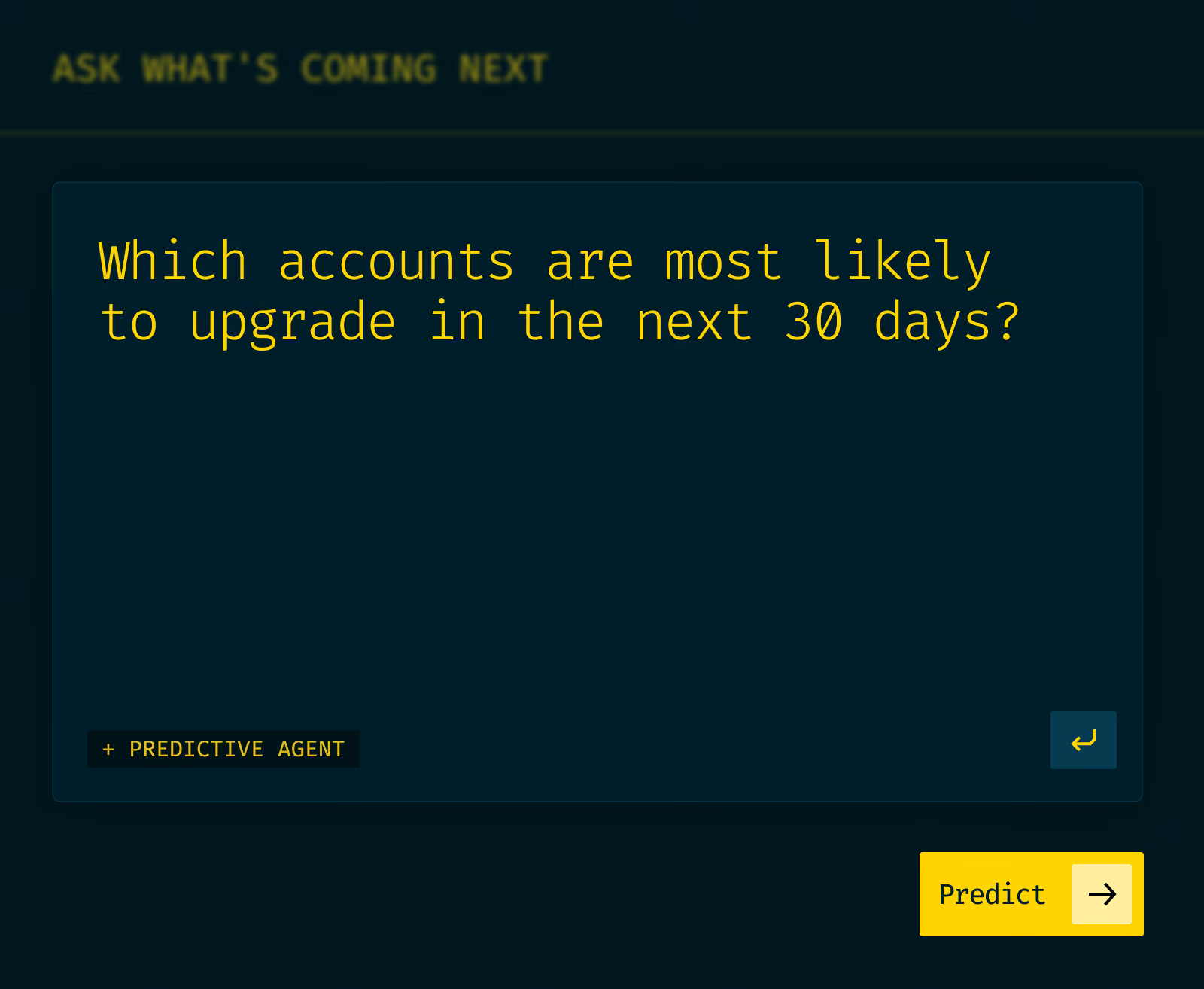
Start from the decision you need to make: contain churn this month, size the impact of a win-back offer, pick the segment for the next launch. Matr turns the problem into a model, answers, and explains how it got there.
Decide. Activate.
Predictions feed straight into your actions: your CRM, your campaigns, your tools. Decisions become operational in minutes, not months.
Monitor
Every model lives inside a data app your teams can open any day: performance over time, drift alerts, predictions against reality. You always know whether to trust the number in front of you.


Matr covers your predictive needs end to end. Pick the use cases that drive your revenue: Matr deploys them, explains them, and keeps them accurate over time.
Demand forecasting, predictive segmentation, dynamic pricing, lead scoring. If it can be predicted, you can build it.
Once your model is in production, Matr gives you three ways to consume predictions.
Dashboard
Self-service dashboards straight from your warehouse, in plain language or in code. Metrics and predictions on the same surface, no ticket required.
API + MCP
It pulls context from where your work already lives, and pushes results back out: query it from Slack or Teams, write an analysis straight into Notion.
Embedding
Embed predictions into your own product through the API. Your users see your interface, your brand, your dashboards. Matr does the work underneath.
A subscription brand cut churn by 20%
The Challenge
The company was losing €200K/month to churn. No data scientist on staff. No time to build a model from scratch.
The Solution
Matr deployed a churn prediction model on BigQuery in one day. The model scores every customer, identifies high-risk profiles, and feeds retention campaigns.
The Impact
- +20% customer retention
- +40K/month recovered revenue
- Model deployed and in production

Questions we hear most.
Every month you spend building ML in-house is a month your competitors spend shipping predictions.
Do I need a data scientist to use Matr?
No. That's the whole point. Your data analyst describes the business question in natural language — Matr handles the ML pipeline.
What types of models can I build?
Classification (churn, scoring, segmentation), regression (revenue forecast, demand planning), and time-series forecasting. Matr selects the best approach based on your data.
How accurate are the models?
It depends on your data quality, but Matr shows you accuracy metrics, baseline comparison, and confidence scores so you can make an informed decision. Typical results: 75-95% accuracy on well-structured data.
Where does my data stay?
In your warehouse. Matr connects to your Snowflake, BigQuery, or PostgreSQL. No data is moved or duplicated.
Can I integrate predictions into my existing tools?
Yes. Via REST API, direct warehouse write-back, or scheduled exports. Predictions flow into your CRM, ERP, spreadsheet — wherever your team works.
What happens if the model's performance degrades?
Matr monitors model drift continuously. When performance drops below threshold, it flags the issue and can trigger automatic retraining.
For more questions, feel free to contact us